Uncomfortable Viewing Position: Encountering Zenta Dzividzinska’s Photographs as Daughter and Scholar

Alise Tifentale, “Uncomfortable Viewing Position: Encountering Zenta Dzividzinska’s Photographs as Daughter and Scholar” [working title]

Chapter commissioned by the editor, Dr. Līga Goldberga, for a volume about the collection of photographs, negatives, and personal papers by Zenta Dzividzinska (1944-2011) at the National Library of Latvia.

Forthcoming, to be published by the National Library of Latvia.
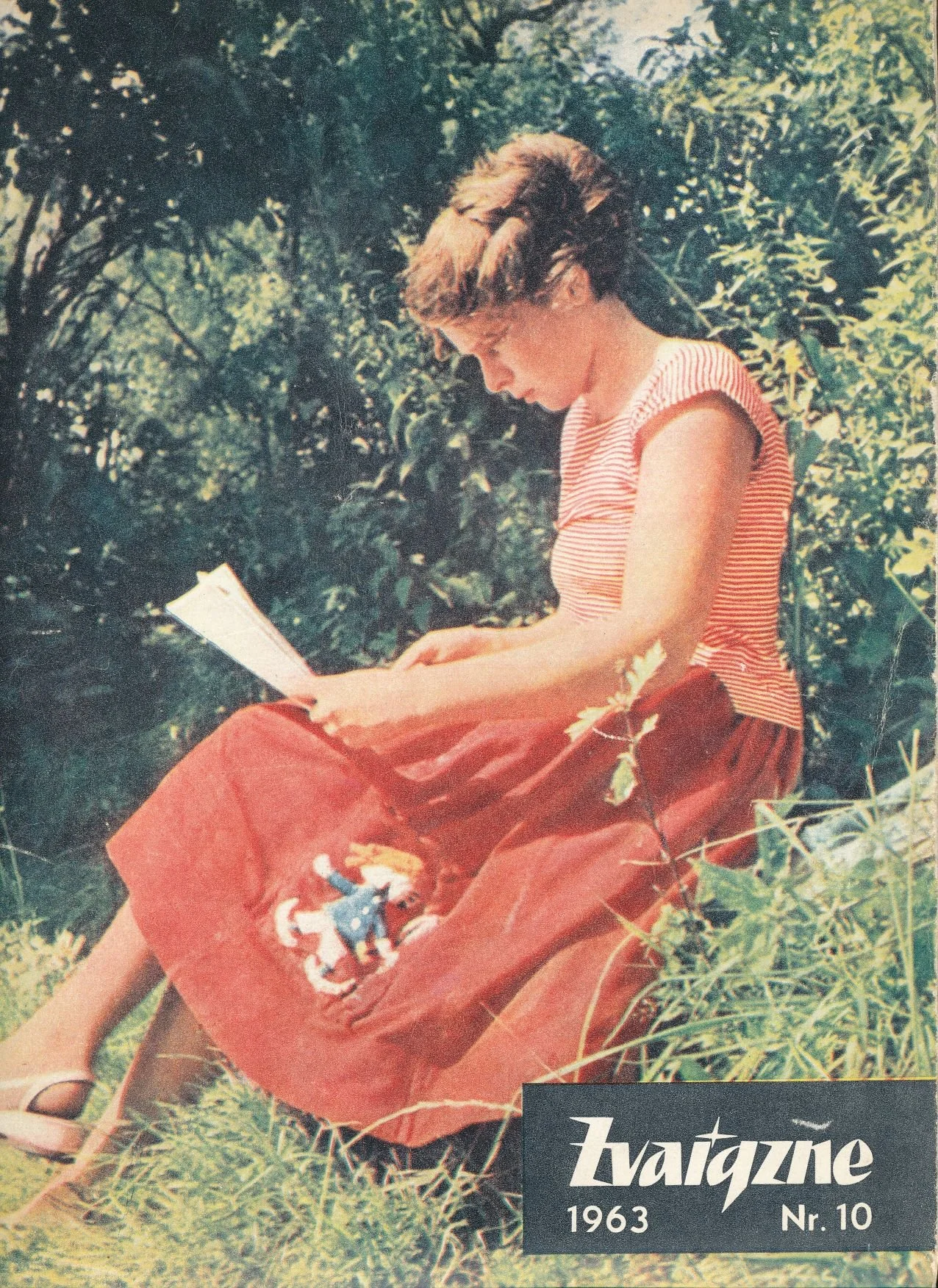
V. Gailis, Anticipating the Summer (“Vasaras gaidās”) [portrait of Zenta Dzividzinska], as reproduced on the cover of May 20, 1963, issue of The Star (Zvaigzne), published in Riga, Latvia.


Abstract [working version as of February 2026]

This chapter outlines some of my encounters with the photographic “archive” of Latvian artist and photographer Zenta Dzividzinska (1944-2011) who is also my mother.

Here I use the word “archive” in quotation marks because her photographic work became an archive only upon entering the collection of the National Library of Latvia in 2021, a decade after her passing. Dzividzinska was an artist, not an archivist, and her own treatment of her photographic work was very far from any of the structures, conditions, and institutional procedures we today associate with archival preservation.

The chapter is simultaneously a personal and professional attempt to reflect on my mother’s creative career, which she had decided to end quite abruptly around the time of my coming into the world. To approach her artistic legacy, I acknowledge my discomfort and struggle with theoretical concepts that I, as a historian of art and photography, have been trained to deploy in discussing and analyzing collections of photographic images and the lives of their makers. I anticipate that somewhere between Barthes’ mournful rumination and Foucault’s razor-sharp dissection of power relations lies another possibility, at this moment only a possibility, of discovering something about the artist, about her work, and the photographic medium itself, while examining it from the extremely uncomfortable viewing position of the artist’s daughter and scholar.

I have based the structure of the chapter on visual analysis of six photographs—portraits and self-portraits of Zenta Dzividzinska from her artistic practice before my birth. Following a brief introduction to the theoretical and methodological framework that informs my reading of these photographs, the narrative unfolds in reverse-chronological order.

I begin with my last encounter with my mother’s photographic work before it entered the collection of the National Library of Latvia: in 2021 her photographs from the 1960s became part of contemporary artist Sophie Thun’s solo exhibition.

Next, I look back at my first encounter with her entire oeuvre, soon after her passing in 2011.

The following section delves into my fragmentary awareness of my mother’s creative work while volunteering as her studio assistant during the last six years of her life.

In the last part of this chapter, I try to recover my earliest memories of my mother’s photographic work in the 1990s, amidst the cruelest economic crisis that came along with the political liberation of Latvia.

Finally, I conclude the chapter with my attempt to formulate my understanding of the origins of Dzividzinska’s career in photography. My relationship with her photographic legacy evokes the ending scenes of Michelangelo Antonioni’s 1966 film Blow-Up (1966), which we watched together and afterwards discussed multiple times during the last years of her life. I feel that the film for her was a particularly relatable metaphor for her own life, aspirations, and artistic practice.
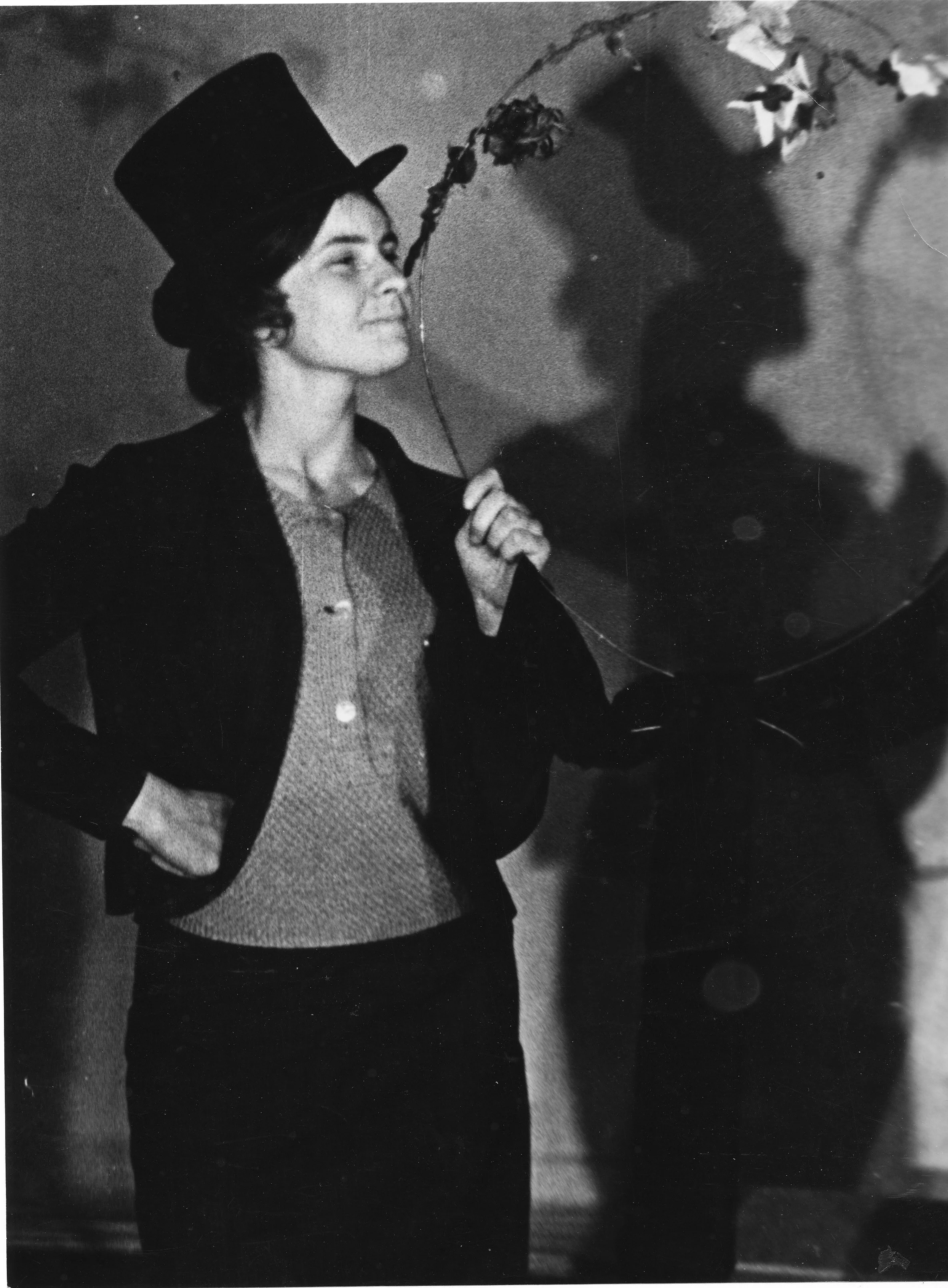
Zenta Dzividzinska. Untitled (Self-portrait). From the series Riga Pantomime, 1964-1966.
Chasing Photographicness: Exploratory Analysis of Zenta Dzividzinska’s Digitized Negatives from the 1960s and 1970s

Alise Tifentale, Anda Baklāne, and Valdis Saulespurēns, “Chasing Photographicness: Exploratory Analysis of Zenta Dzividzinska’s Digitized Negatives from the 1960s and 1970s” [working title]

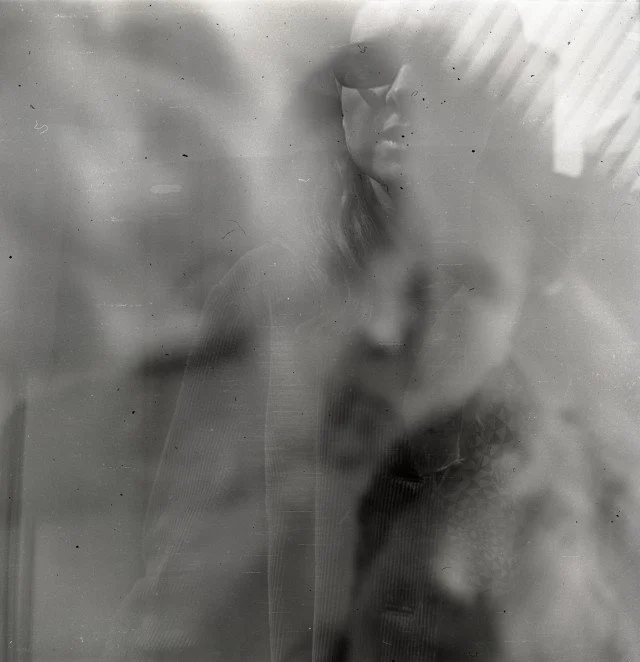
Zenta Dzividzinska. Untitled (digital scan from a 6x6 negative), 1960s. Collection of the National Library of Latvia.


In this article, we discuss our ongoing research on the archive of Latvian artist and photographer Zenta Dzividzinska (1944-2011), acquired by the National Library of Latvia in 2021. Dzividzinska’s archive, primarily comprising her negatives made in the 1960s and 1970s, differs from most other institutional photo collections that consist of prints, and poses specific research challenges.

A relatively small selection of Dzividzinska’s photographs from these two decades is housed in art museums, and curators have circulated them within various discursive systems, such as nonconformist art, humanist photography, feminist art, and queer and gender studies, among others.

However, Dzividzinska’s photographic legacy has not yet been fully examined in its entirety, mostly because the majority of her photographs have survived only in the format of negatives that have never been printed and exhibited.

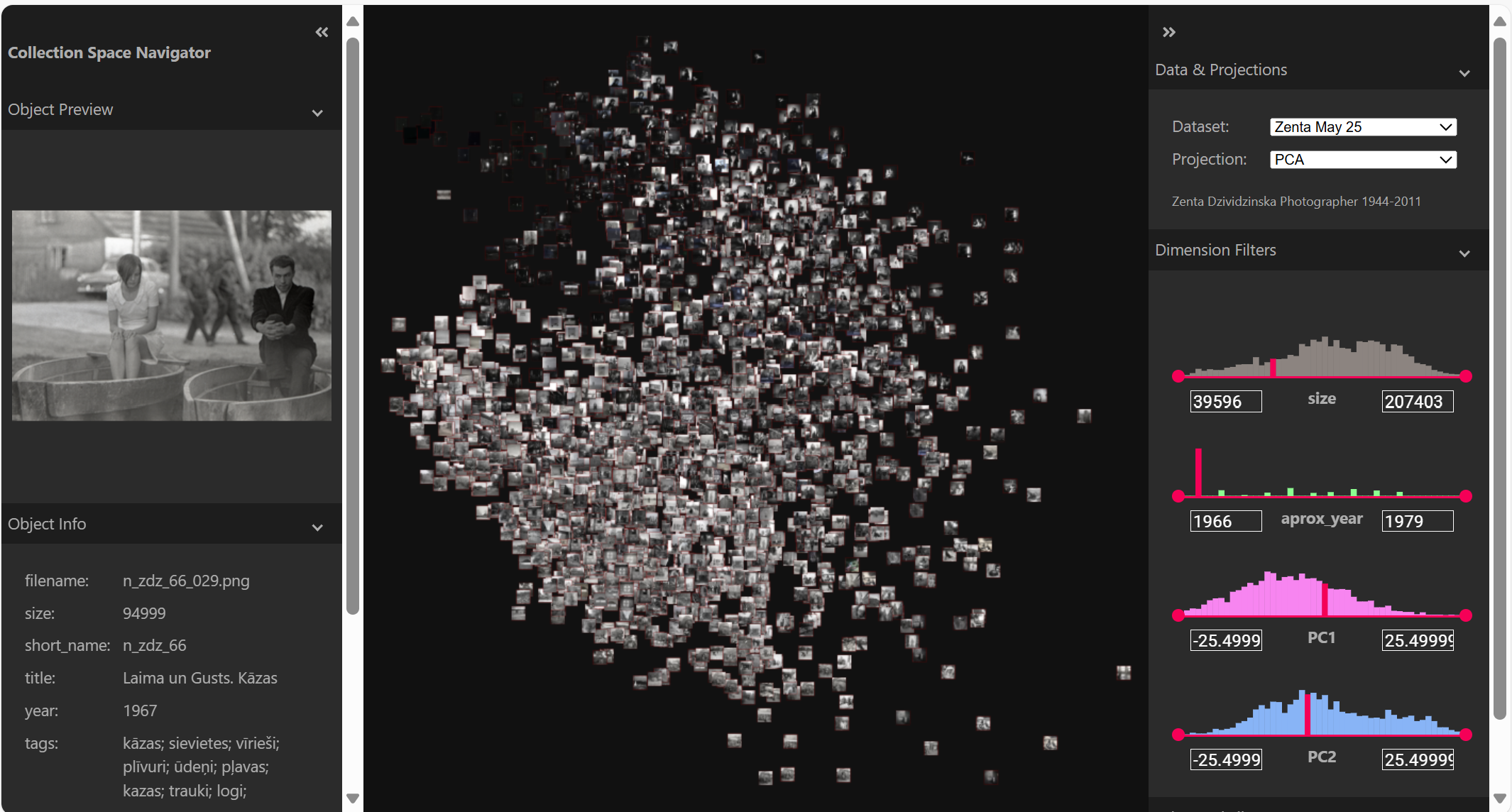
We applied machine learning and computer vision methods, working with a dataset of more than six thousand digitized frames from this collection of previously unexamined negatives.

We investigated the usefulness of object recognition techniques, explored the potential of mapping the artist’s signature style based on an inquiry into the photo-technical parameters of the negatives, and experimented with automated classification and grouping of individual frames based on freeform natural language descriptions.

While discussing our research, we also address broader questions about digital curation and the materiality of pre-digital photo collections. Based on our findings, we chart the potential as well as limitations of what we can find out through digitizing an individual photographer’s collection of negatives and applying digital humanities methods.

Navigating Pictorial Photography and Photographic Art: How Photo Clubs Built a Global Art World

Alise Tifentale, “Navigating Pictorial Photography and Photographic Art: How Photo Clubs Built a Global Art World;” “Foto Cine Clube Bandeirante (FCCB),” and “Annemarie Heinrich.”

Essays commissioned by Dr. Charmaine Toh, the Senior Curator of International Art (Photography) at Tate, for the catalogue to accompany a major exhibition on the history of global Pictorialism at the Tate Modern. Curated by Dr. Toh, the exhibition, titled "Light and Magic. The Birth of Art Photography," is scheduled to open in October 2026. 

Photo: Janis Kreicbergs.

Atlas as Method: Discovering Zenta Dzividzinska’s Photographic World-Making

Alise Tifentale, “Atlas as Method: Discovering Zenta Dzividzinska’s Photographic World-Making” [working title], in Agents of Mediation: Perspectives on New Media and Lens-Based Practices in Eastern Europe Since 1968, edited by Pauline Herrmann, Rebecka Öhrström Kann, Jess Young, Madeleine Dale, and Jordan Tan. Forthcoming. To be published by Routledge.

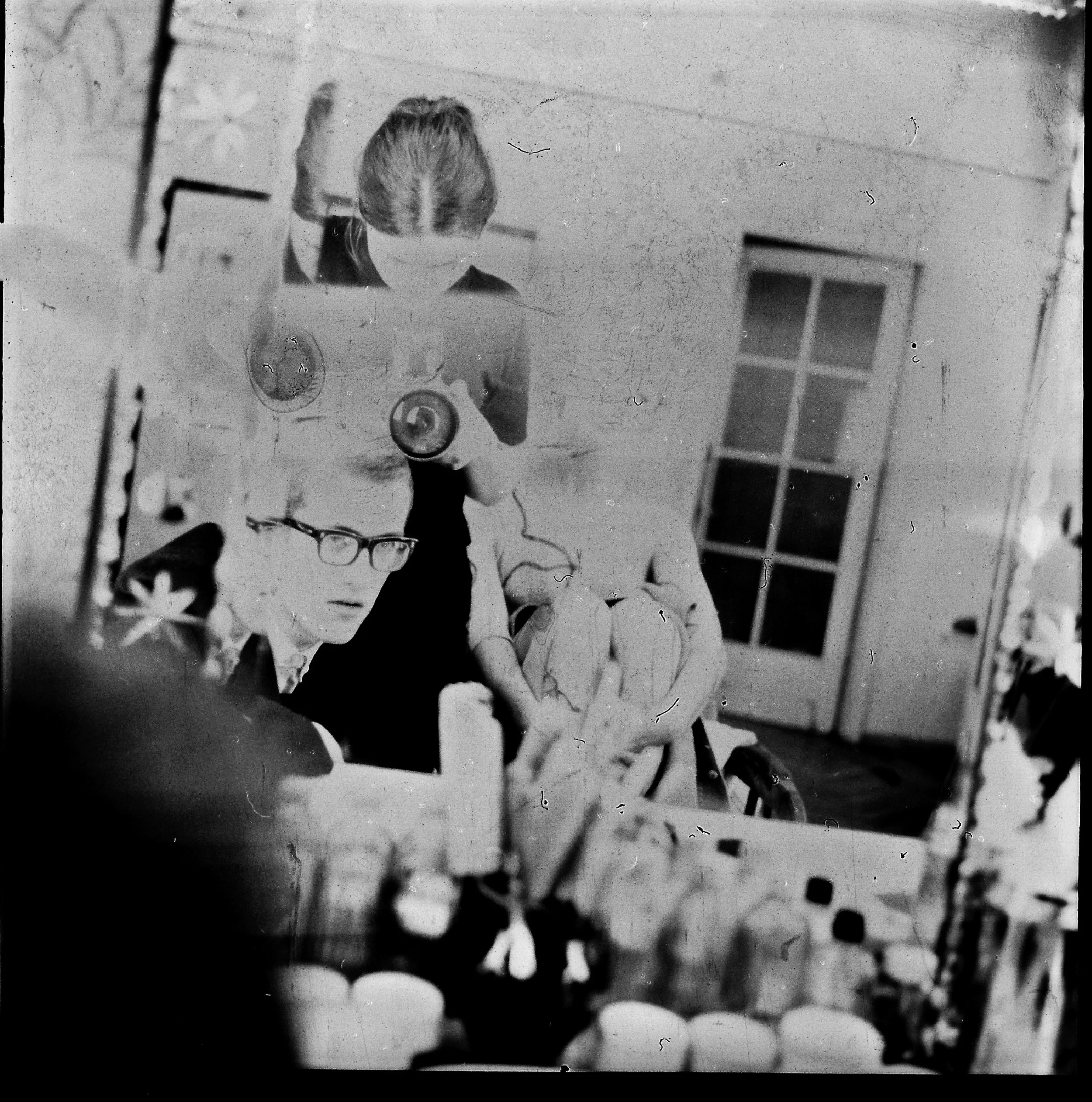
Zenta Dzividzinska. Untitled (self-portrait in mirror), 1967. Courtesy Art Days Archive

Abstract of my chapter:

Latvian artist Zenta Dzividzinska (1944–2011) in her lifelong photographic practice created an atlas of her world spanning her early twenties to her final months. Drawing on Aby Warburg's concept of the atlas as a tool for nonlinear visual thinking, I posit that photography for Dzividzinska served as a means of constructing, understanding, and recording her world through a profoundly personal practice, largely independent of external validation. During her lifetime, no one except herself saw most of her photographic work which remained in the format of negatives and contact prints. Nevertheless, several of her photographs have been exhibited or reproduced as art at various times. This chapter traces the selective visibility of Dzividzinska’s photographs and their changing public functions at three historical moments: the 1960s under Soviet rule, the post-independence 1990s, and the globally connected 2020s. At each of these historical moments, institutions, curators, critics, historians, or peers have placed her images in various discursive categories such as ‘salon’, ‘fine art’, ‘documentary’, ‘nonconformist,’ or ‘humanist’ photography. But how do we see beyond the seductive surface of individual photographs to grasp their collective work as agents of world-making and -mapping? By reconciling Dzividzinska’s private self-discovery with increasingly public circulation of her images, this chapter interrogates the fluidity of meaning, authorship, and agency.

Book description from the editorial team:

This edited volume offers critical insights into the agency of lens-based and digital images across the diverse historical and political landscapes of Central and Eastern Europe from 1968 onward. Examining the region’s shared and heterogeneous histories of socialism, as well as the varied expansions of Western neoliberal capitalism after 1989, it explores these works as a means of fostering communication, disruption, and individual expressions of agency. From Yugoslav filmmaker Želimir Žilnik’s Gastarbeiter documentaries, to the early developments of Bulgarian contemporary art, and self-representation in East Germany’s final decade, the book examines critical interventions through the image in the mediums of film, video, photography and new media. Situating these practices as conduits for ideas, encounters, and pursuits of solidarity in the region and beyond, the book offers insights into the ways these practices have reimagined representation, subverted power structures, and generated vital networks of knowledge. In our increasingly image-mediated world, they speak to the power of images as agents of change in their potential to disrupt, communicate, and form critical connections.