Alise Tifentale, Anda Baklāne, and Valdis Saulespurēns, “Chasing Photographicness: Exploratory Analysis of Zenta Dzividzinska’s Digitized Negatives from the 1960s and 1970s” [working title]
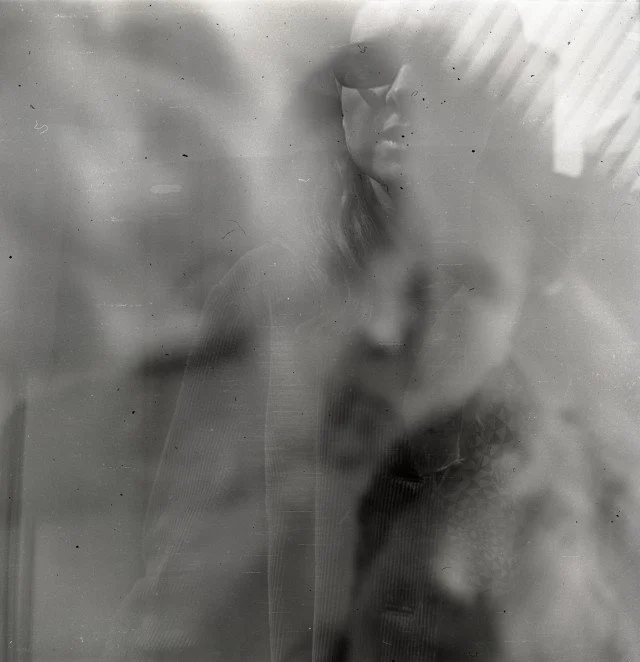
Zenta Dzividzinska. Untitled (digital scan from a 6x6 negative), 1960s. Collection of the National Library of Latvia.
In this article, we discuss our ongoing research on the archive of Latvian artist and photographer Zenta Dzividzinska (1944-2011), acquired by the National Library of Latvia in 2021. Dzividzinska’s archive, primarily comprising her negatives made in the 1960s and 1970s, differs from most other institutional photo collections that consist of prints, and poses specific research challenges.
A relatively small selection of Dzividzinska’s photographs from these two decades is housed in art museums, and curators have circulated them within various discursive systems, such as nonconformist art, humanist photography, feminist art, and queer and gender studies, among others.
However, Dzividzinska’s photographic legacy has not yet been fully examined in its entirety, mostly because the majority of her photographs have survived only in the format of negatives that have never been printed and exhibited.
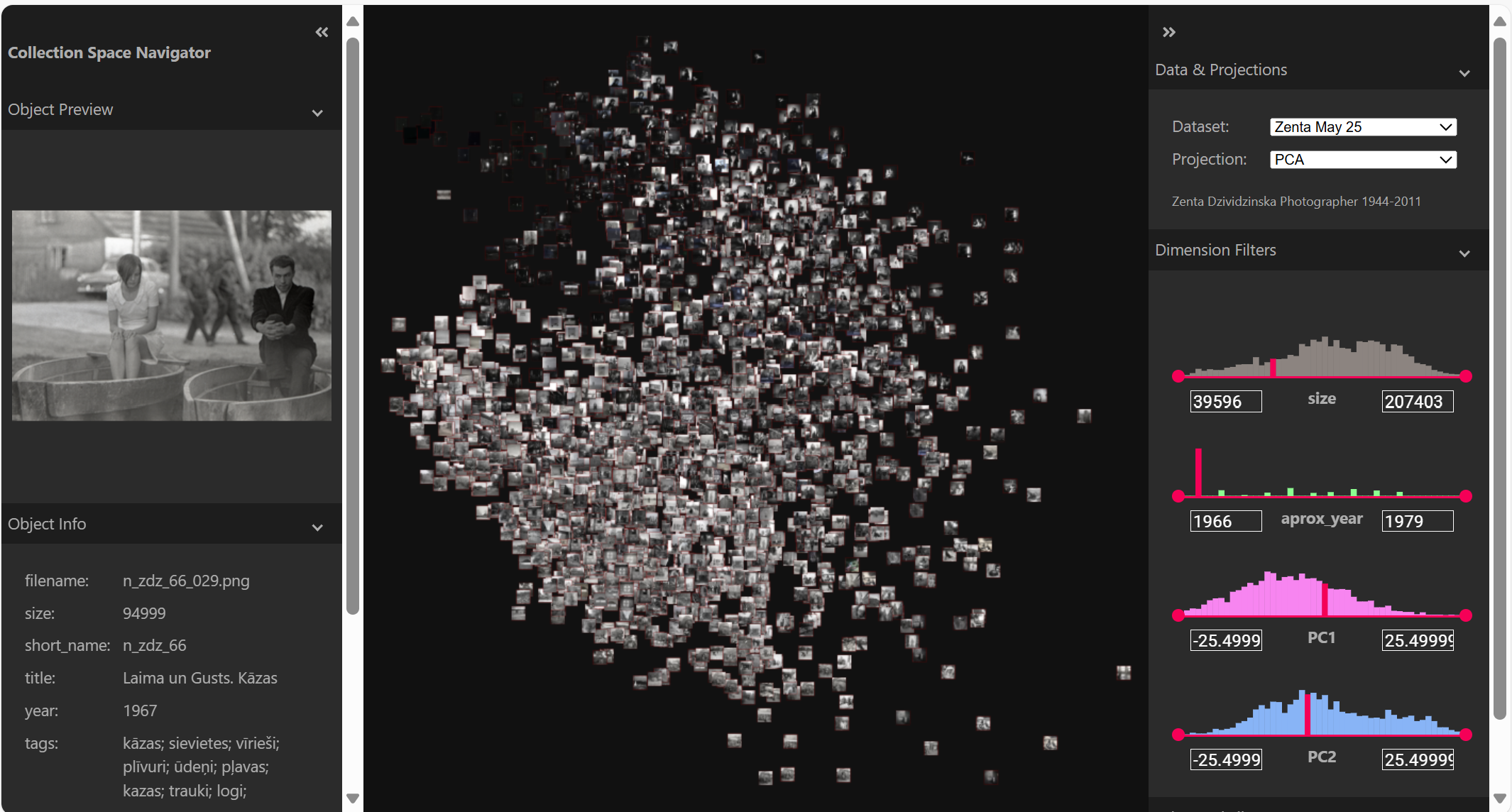
We applied machine learning and computer vision methods, working with a dataset of more than six thousand digitized frames from this collection of previously unexamined negatives.
We investigated the usefulness of object recognition techniques, explored the potential of mapping the artist’s signature style based on an inquiry into the photo-technical parameters of the negatives, and experimented with automated classification and grouping of individual frames based on freeform natural language descriptions.
While discussing our research, we also address broader questions about digital curation and the materiality of pre-digital photo collections. Based on our findings, we chart the potential as well as limitations of what we can find out through digitizing an individual photographer’s collection of negatives and applying digital humanities methods.