Forthcoming
2025

2024


“Art, Idealism, and Networking: Brazilian Participation in the Global Photo-Club Culture, 1950–1965,” translated into Portuguese and published as:
Alise Tifentale, “Arte, idealism e rede de contatos: a participação brasileira na cultura fotoclubista global (1950–1965),” 168–192, in Helouise Costa and Heloisa Espada, eds., Fotografia moderna no Brasil, 1900–1950. Arte, saber e poder (São Paulo, IMS: 2024).
2023


2022


2021


2020

On December 31, 2020, the Riga-based Low Gallery published the second edition of The Crisis Newsletter (Krīzes Vēstnesis), for which I had the pleasure to write a short essay on the daily photographic practice on Instagram: “#dailyphotography and #fail”

The essay was written in January and February 2020, just before the COVID-19 outbreak paralyzed our lives, and published in August 2020, just after the most severe restrictions had been lifted and a biennale could take place in Riga, Latvia. Although written just a few months earlier, the essay today seems to belong to some distant time and place, to a world that, likely, will remain only in our memories.
The “Olympiad of Photography”: FIAP and the Global Photo-Club Culture, 1950–1965 is a PhD dissertation I defended at the Art History department, the Graduate Center, City University of New York, in 2019 and which is published by CUNY Academic Works in 2020.
2019

My “Introduction to José Oiticica Filho's ‘Setting the Record Straighter’ “ accompanies a reprint of Oiticica Filho’s 1951 article whose first translation from Portuguese (by Luisa Valle) I commissioned for a special edition of journal ARTMargins vol. 8, no. 2 (2019), edited by Chelsea Haines and Gemma Sharpe.

“Following the Invisible Hand: The Role of Photo Clubs, Magazines, Exhibitions, and Curators in Latvian Photography, 1960–2000” is a commissioned research article for a volume of articles Ten Episodes in Art of the Second Half of the 20th Century in Latvia. Edited by Elita Ansone. Riga: Latvian National Museum of Art, 2019. In English and Latvian.

"FIAP Biennial in Photokina 1956: A Revolt Against the Universal Language of Photography,” The Notebook for Art, Theory and Related Zones 26 (2019): 120-146.
2018
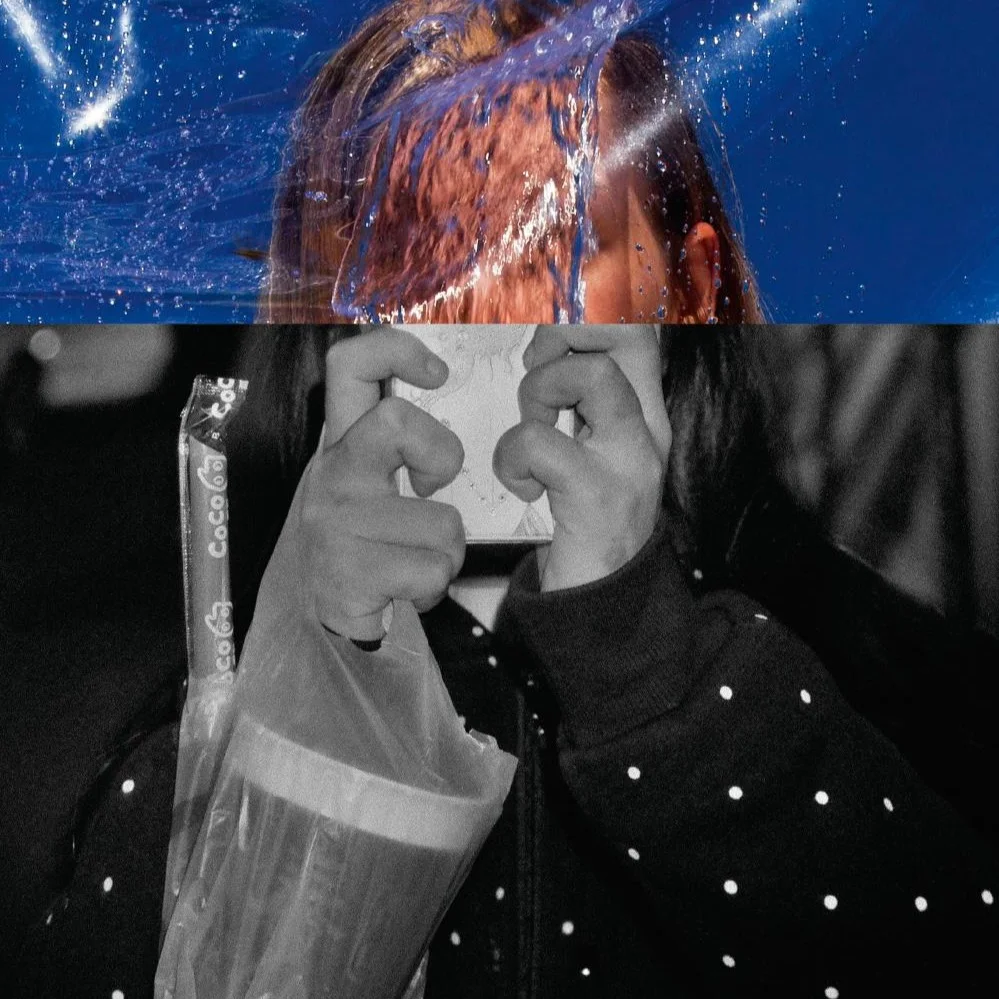
“Five Sensational Tweets about Photographs That I Have Not Seen” in Latvian Photography 2018 Yearbook (Riga: FK, 2018).

Article "Machines, Methods, and Humans: On the Production Line of Contemporary Photography" is published in Fotografija 35, no. 1 (2018). This is a special edition of the magazine “New Tools in Photography: From Google to the Algorithm” edited by Paul Paper.

"Fifty Year Eclipse: Illuminating the Forgotten Legacy of Photographer Vilis Rīdzenieks" inVilis Rīdzenieks. Edited by Katrīna Teivāne-Korpa. Riga: Neputns, 2018.

Published in Moscow, Russia, from 1926 to 1991, Sovetskoe Foto (Soviet Photography) was the only specialized photography magazine in the Soviet Union, aimed at a broad audience of professional photojournalists and amateur photographers. As such, it is unequaled in representing the official photographic culture of the USSR throughout the history of this country. In this article, researchers at the Cultural Analytics Lab explore the digital archive of Sovetskoe Foto to find out what it can tell us about the history of this remarkable magazine and the twentieth-century photography in general.

“The greatest photographic exhibition of all time—503 pictures from 68 countries—created by Edward Steichen for the Museum of Modern Art,” says the cover of the photo-book accompanying exhibition The Family of Man. The exhibition took place at the Museum of Modern art (MoMA), New York, from January 24 to May 8, 1955. It was highly popular—the press claimed that more than a quarter of million people saw it in New York. But it gained its central role in the twentieth century photography history largely because of its international exposure. The U.S. Information Agency popularized The Family of Man as an achievement of American culture by presenting ten different versions of the show in 91 cities in 38 countries between 1955 and 1962, seen by estimated nine million people But, contrary to the popular reception, scholarly criticism of the exhibition was—and continues to be—scathing.

That photography is a language, and a universal one at that, was a popular metaphor in the 1950s. Such a language, as photographers and politicians claimed, could finally unite all people of the world because it transcends languages, cultures, religions, political positions, and any other differences. Although today such a belief in the power of photography can seem naïve, in the decade following the end of the Second World War it expressed a hope for a better—peaceful—future. But not just any kind of photography was believed to be a universal language. When Rothstein and many others in the 1950s were talking about photography as a universal language, they arguably had “straight,” documentary photography on their mind. But exactly what kind of photography is “straight,” and why it was supposed to be so universal?

“The Selfie: More and Less than a Self-Portrait,” in Moritz Neumüller, ed., Routledge Companion to Photography and Visual Culture (London, New York: Routledge, 2018), 44–58.

Alise Tifentale and Lev Manovich, "Competitive Photography and the Presentation of the Self" in Jens Ruchatz, Sabine Wirth, and Julia Eckel, eds., Exploring the Selfie: Historical, Analytical, and Theoretical Approaches to Digital Self-Photography (Palgrave Macmillan, 2018), 167-187.
2017

"¿Qué separa a los fotógrafos de los artistas?" is my article "Into the Photographers’ Universe: What Separates Photographers from Artists?" translated into Spanish and published in October 18, 2017 edition of MALBA Diario, online magazine of the Museo de Arte Latinoamericano de Buenos Aires(MALBA), Argentina.

The Riga Central Market is a landmark structure in the center of Riga, capital city of Latvia. It was built in the 1930s. Renowned Latvian photographer Māra Brašmane has observed everyday life in this market in the 1960s, 1970s, 1980s, 1990s, and into the 2000s and 2010s. Through the changes in the marketplace you can notice the changes that Latvian society underwent in these decades.

Today, we are used to seeing documentary images by photographers such as Margaret Bourke-White, Henri Cartier-Bresson or Robert Doisneau as fine art prints in art museums and galleries. But most of these images were initially made for the magazine page where the photographer’s name often went unnoticed. The US-based illustrated weekly magazine Life was instrumental in the process of photographers gaining more recognition and global exposure. However, this process was neither smooth nor free of obstacles.

This essay describes a global community of photographers, their constant struggle to be recognized as artists, and the constant failure of this struggle. In this essay, I introduce the term “photographers’ universe” to define the community of photographers. An abyss separates this photographers’ universe from the art world.

"São Paulo photographers in global context: Brazilian participation in the International Federation of Photographic Art, 1950–1965." Research paper presented at the conference In Black and White: Photography, Race, and the Modern Impulse in Brazil at Midcentury at The Graduate Center, City University of New York, May 3, 2017.
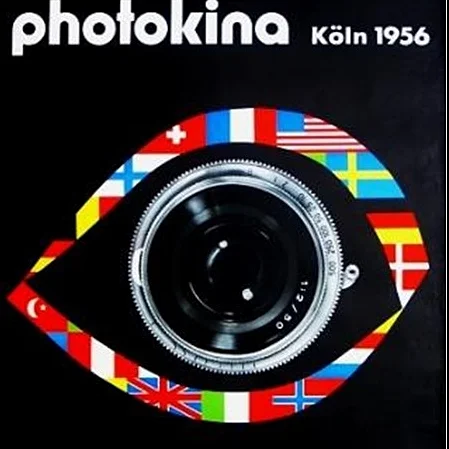
"The Misunderstood 'Universal Language' of Photography: The Fourth FIAP Biennial, 1956." Paper presented at the conference Art, Institutions, and Internationalism: 1933–1966 in New York City, March 7, 2017.


A review of the exhibition Anri Sala: Answer Me at the New Museum, 2016, commissioned by the CAA.Reviews.

“Rules of the Photographers’ Universe,” Photoresearcher (journal of the European Society for the History of Photography), No. 27 (April 2017), pp.68-77. Special issue "Playing the Photograph," edited by guest editors Matthias Gründig and Steffen Siegel.

“Photography in Latvia, 1970–2000,” in The History of European Photography 1970–2000 (vol. 3) (Bratislava: Central European House of Photography, 2017). ISBN 9788085739701.
2016

"Photography: Taken, not Made," in Arnis Balčus, ed., Territories, Borders, and Checkpoints (Riga Photomonth Catalogue) (Riga: Society Riga Photomonth, 2016), pp. 90-95. ISBN 978-9934-14-852-1.
The essay accompanied an exhibition of experimental photography, Paintings and Sculptures, curated by Arnis Balčus and Elīna Sproģe as part of Riga Photomonth programming. The artists in the exhibition: Eduards Gaiķis, Valters Jānis Ezeriņš, and Līga Spunde. The exhibition took place at the Exhibition hall of the Latvian National Library, Riga, May 7-30, 2016.

2015

Review of the exhibition Public Eye: 175 Years of Sharing Photography at the New York Public Library, Stephen A. Schwarzman Building from December 12, 2014 to January 3, 2016. Published in Studija 100, no.1 (2015): 72-77.


“Art of the Masses: From Kodak Brownie to Instagram,” Networking Knowledge 8, No. 6 (2015). Special issue “Be Your Selfie: Identity, Aesthetics and Power in Digital Self-Representation,” edited by Laura Busetta and Valerio Coladonato.

2014

“How to Stop Worrying and Love the Computer.” Work-in-progress: Introduction to the exhibition I am Your Servant, I am Your Worker for the James Gallery, New York City. Published in Studija 96, no. 3 (2014): 50 - 65.

"What’s Next after the Year of the Selfie, or Work-in-Progress by Lev Manovich and the Software Studies Initiative." Studija 94, no. 1 (2014): 6-21.

The Selfie: Making sense of the “Masturbation of Self-Image” and the “Virtual Mini-Me.” Selfiecity, 2014. This essay reviews some of the recent debates on the selfie (at the time of writing - late 2013 and early 2014) and places it into a broader context of photographic self-portraiture, investigating how the Instagrammed selfie differs from its precursors, as well as mapping out avenues for further research and interpretation of the results obtained in Selfiecity.

2013


"The New Masters of the Land, or Our Muddy Pastalas* on the Parquet Floor of Cosmopolitan Venice." Preliminary remarks by Alise Tifentale, a co-curator of the Latvia’s exposition North by Northeast at the 55th International Art Exhibition of Venice Biennale, May 31 — November 24, 2013. Published in Studija 90, no. 3 (2013).


2012

“To Put Things into Order.” Review of exhibition This Will Have Been: Art, Love & Politics in the 1980s at the Museum of Contemporary Art, Chicago, February 11 - June 3, 2012. Published in Studija 84, no. 3 (2012).

“Admirable Human Error, or What Drinking and Welding can Lead to.” Review of Tom Sachs solo exhibition Space Program: Mars at the Park Avenue Armory, New York, May 16 — June 17, 2012. Published in Studija 85, no. 4 (2012).

“How to Rectify All Mistakes at Once” Review of dOCUMENTA 13 in Kassel, Germany, from June 9 to September 19, 2012. Published in Studija 86, no. 6 (2012): 14 - 23.

“How Quickly Does Avant-garde Age?” Review of exhibition Art of Another Kind: International Abstraction and the Guggenheim, 1949–1960 on view at the Solomon R. Guggenheim Museum, New York, June 8 - September 12, 2012. Published in Studija 87, no. 6 (2012): 8-17.


“The First Exhibition of Fine Art Photography in Latvia after World War II. 1957–1958,” Art History & Theory 15 (2012): 26-33. Article in Latvian with a summary in English.

2011

"Results of the Revision." Review of the exhibition And Others – Movements, Explorations and Artists in Latvia 1960–1984, Riga Art Space, Riga, Latvia, November 17 — December 30, 2010. Published in Studija 76, no. 1 (2011): 30-37.

“When a Process Acquires Form and Becomes a Canon.” Review of Rasa Šmite, Creative Networks (Riga: RIXC Publishing, 2011). Published in Studija 81, no. 6 (2011).

"We from Nowhere and Our Art." Review of exhibition Ostalgia at the New Museum, New York, July 6 - October 2, 2011. Published in Studija 81, no. 6 (2011).


2010

"Surrealism as the Mother and Father of Photographic Art." Review of the exhibition La Subversion des images. Surréalisme, Photographie, Film at the Centre Pompidou, Paris, September 23, 2009 — January 11, 2010. Published in Foto Kvartals 21, no. 1 (2010): 12—19.

“Photography Exhibitions in the International Photography Trade Fair Photokina.” Review of Photokina 2010, Cologne, Germany, September 21—26. Published in Foto Kvartals 24, no. 4 (2010): 62—65.

"Paris Photo and the Spotlight on Central European Classics." Review of Paris Photo, November 18—21, 2010. Published in Foto Kvartals 26, no. 6 (2010): 52-55.

“Latvian Photographer Uldis Briedis and Some Aspects of Documentary Photography.” Published in Time Hunter, ed. Laima Slava (Riga: Neputns, 2010).

"Does a Group of More than Three Women Make It Feminist?" Review of exhibition Gender Check. Femininity and Masculinity in the Art of Eastern Europe at the Museum Moderner Kunst Stiftung Ludwig, Vienna, November 13, 2009 — February 14, 2010; and at the Zachęta National Gallery of Art, Warsaw, March 19 — June 13, 2010. Published in Studija 70, no. 1 (2010): 54-63.

"Is it Easy to be Caught Between 'Sunday Artists' and Commercial Kitsch?" Review of the Rauma Biennale Balticum 2010 What’s up, Sea? Contemporary Art of the Baltic Sea Region. Rauma Art Museum, Rauma, Finland, June 12 — September 19, 2010. Published in Studija 75, no. 6 (2010).

"Either the Hunter or the Hunted – There’s No Other Option" Review of the exhibition Chasing Napoleon at the Palais de Tokyo, Paris, from October 15, 2009 to January 17, 2010. Published in Studija 70, no. 1 (2010).

“From Photographic Art to Photography in Art,” in Ieva Astahovska, ed., Nineties. Contemporary Art in Latvia (Riga: The Latvian Center for Contemporary Art, 2010), 296-306.

“If We Really Do Love Art, We Live in It. The Image of Contemporary Art and Artist in Latvian Art Criticism of the 1990s,” in Ieva Astahovska, ed., Nineties. Contemporary Art in Latvia (Riga: The Latvian Center for Contemporary Art, 2010), 108-119.
2009

"The Joyful Danse Macabre of Ragnar Kjartansson." Published in Studija 65, no. 2 (2009).

“Enjoy the Riches of the Countryside.” Review of 53rd International Art Exhibition, la Biennale di Venezia: Fare Mondi // Making Worlds. Artistic Director: Daniel Birnbaum. Venice, June 7 — November 22, 2009. Published in Studija 57, no. 4 (2009).

“Biennale Without a Budget.” Review of the 4th Prague Biennale. Prague, May 14 — July 26, 2009. Published in Studija 67, no. 4 (2009).
"Outlining the Future of Photographic Art." Review of the 1st Prague Photo Biennale. Prague, May 14 — July 26, 2009. Published in Foto Kvartals 18, no. 4 (2009). In Latvian only.

"The Return of the Torn Out Pages." Review of Urban Stories, The X Baltic Triennial of International Art at the Contemporary Art Center, Vilnius, Lithuania, September 25 – November 22, 2009. Published in Studija 69, no. 6 (2009).
2008

“Wolfgang Tillmans. From Nightclubs to Metaphysics.” Review of Wolfgang Tillmans’ solo exhibition Lighter at the contemporary art museum Hamburger Bahnhof, Berlin, from March 21 to August 31, 2008. Published in Foto Kvartals 11, no. 3 (2008): 64-69.

"Illustrated Stories. The 4th Hamburg Photography Triennial." Triennale der Fotografie Hamburg. Conferences and seminars take place from April 11 to 20, 2008, exhibitions throughout the summer. Published in Foto Kvartals 11, no. 3 (2008): 80-91.

Review of the 11th International Architecture Exhibition — 2008 Venice Biennale of Architecture, Out There: Architecture Beyond Building, September 14 —November 23, 2008. Directed by Aaron Betsky. Published in Studija 62, no. 5 (2008) .


"The Simple Truths of the Complicated Person, or Vice Versa." Review of Manifesta 7, European Biennial of Contemporary Art, Trentino - Alto Adige/ South Tyrol region, Italy, July 19 - November 2, 2008. Published in Studija 61, no. 4 (2008).

2007

“Looking for Inspiration in a New York Cemetery, Taipei Slums, and at Monroe’s in St. Petersburg.” Article about contemporary photography at the 52nd Venice biennale. Published in Foto Kvartals 7, no. 3 (2007): 80—87.

“Palaces to Workers!” Review of the 52nd International Art Exhibition, la Biennale di Venezia: Think with the Senses – Feel with the Mind. Artistic Director: Robert Storr. Venice, June 10 — November 21, 2007. Published in Studija 55, no. 4 (2007).

“Contemporary Art as an Atheist's Prayer.” (Laikmetīgā māksla kā ateista lūgšana.) Review of La Biennale de Lyon, The 00s: The History of a Decade That Has Not Yet Been Named. Lyon, France, September 19, 2007 — January 6, 2008. Published in Studija 57, no. 6 (2007).
2006

My essay about the lesser known works of the Latvian photographer Gunars Binde. Published in Gunārs Binde, ed. Laima Slava (Riga: Neputns, 2006). Artist: Juris Petraškevičs. 160 pp. In Latvian and English. ISBN 9984-729-91-5

“What I Bought in Basel This Year.” Review of Art Basel, June 14 — 18, 2006. Published in Studija 49, no. 4 (2006).

"Nothing Personal." Review of the 2nd Brighton Photo Biennial. Brighton, UK, October 5 - 29, 2006. Published in Foto Kvartals 4, no. 4 (2006): 70-75.

"Push the Button and Wait For the Green Human." Review of the Liverpool Biennial of Contemporary Art, September 16 - November 26, 2006. Published in Studija 51, no. 6 (2006).
2005

“Linards Kulless: Around the World - With Happiness and the Auseklītis.* An Interview.” Published in Studija 45, no. 6 (2005).

"Trespassers: An Anatomical Theatre, the “Madagascar Phenomenon,” and the Chronicle of the Crusades." Review of the exhibition Trespassers. Contemporary Art of the 1980s, the Arsenals exhibition hall of the Latvian National Art Museum, Riga, Latvia. February 18 - March 13, 2005. Published in Studija 41, no. 2 (2005).

"Much Ado About Nothing on The Monitor, Or a Story about the Absence of Any Story, Since the Story is Meaningless." Review about the exhibition of Latvian contemporary art, Turmoil (Jukas) at the exhibition hall Arsenals, Riga, Latvia. April 2 — May 8, 2005. Published in Studija 42, no. 3 (2005).

"My Quest for Relics and the People I Met along the Way." Review of the 51st International Art Exhibition, la Biennale di Venezia: The Experience of Art, curated by María de Corral, and Always a Little Further, curated by Rosa Martínez. Venice, June 12 — November 6, 2005. Published in Studija 43, no. 4 (2005).

“So Beautiful It Hurts.” Interview with artist Laura Feldberga. Published in Studija 44, no. 5 (2005).

"A Slippery Path or a Hazardous Tribute to Humanism." Review of Backlight05: The 7. International Photography Triennial in Tampere, Finland. September 9, 2005 — January 15, 2006. Published in Studija 45, no. 6 (2005).
2004

"He Lives in Photography." Interview with Latvian photographer Gunars Binde. Published in Studija 34, no. 1 (2004).

"Score of the Game: Boring Videos 100 : Revelation 1." Review of Manifesta 5, European Biennial of Contemporary Art, Donostia-San Sebastián, Spain, June 11 — September 30, 2004. Published in Studija 37, no. 4 (2004).

“An Introductory Course to Contemporary Art.” Review of an international contemporary art exhibition The Dream Island, Noass Gallery, Riga, Latvia. June 2 — September 25, 2004. Published in Studija 38, no. 5 (2004).
2003

"The Riga Fashion in Art 2003." Review of the exhibition RE: Public taking place in different venues across Riga, Latvia, September 6—21, 2003. Published in Studija 32, no. 5 (2003).
2002

“Three Stories About Love, Or Manipulating the Facts of the Past in the Name of A Better Future.” Article about contemporary art viewed through the lens of science fiction writer Stanisław Lem and sociologist and cultural theorist Jean Baudrillard. Published in Studija 27, no. 6 (2002).

"Our Future in Paper Architecture." Review of the 8th Venice Architecture Biennale Next. Venice, Italy, September 8—November 3, 2002. Published in Studija 26, no. 5 (2002).

“Irrefutable Rights Not To Be Understood.” Essay about contemporary art, artists, and life in the city. Published in Studija 24, no. 3 (2002).
1999

“Alone With/Without Oneself.” Introduction for Latvian photographer Arnis Balcus' artist's book Desire to be Adored (Riga, 1999).
1998

“Communication Art: The End of Humanism or Beginning of Anti-Humanism? Or Not Yet?” First published in art magazine FF, no. 1 (1998). Also published in Nettime mailing list, February 19, 1998. Reprinted in Acoustic Space 1, no. 1 (1998): 46-47.
Quisque iaculis facilisis lacinia. Mauris euismod pellentesque tellus sit amet mollis.