Alise Tifentale, “Atlas as Method: Discovering Zenta Dzividzinska’s Photographic World-Making” [working title], in Agents of Mediation: Perspectives on New Media and Lens-Based Practices in Eastern Europe Since 1968, edited by Pauline Herrmann, Rebecka Öhrström Kann, Jess Young, Madeleine Dale, and Jordan Tan. Forthcoming. To be published by Routledge.
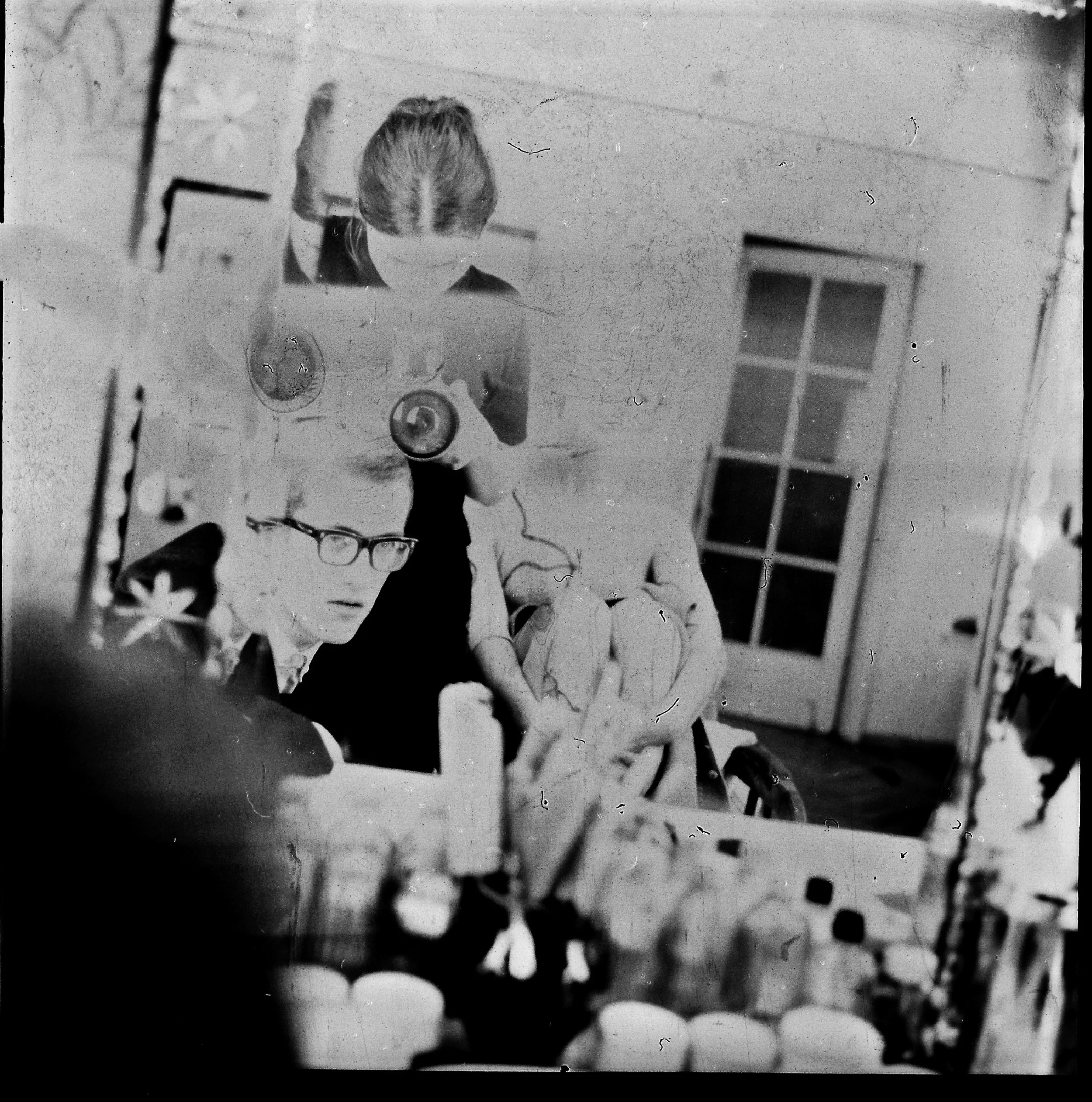
Zenta Dzividzinska. Untitled (self-portrait in mirror), 1967. Courtesy Art Days Archive
Abstract of my chapter:
Latvian artist Zenta Dzividzinska (1944–2011) in her lifelong photographic practice created an atlas of her world spanning her early twenties to her final months. Drawing on Aby Warburg's concept of the atlas as a tool for nonlinear visual thinking, I posit that photography for Dzividzinska served as a means of constructing, understanding, and recording her world through a profoundly personal practice, largely independent of external validation. During her lifetime, no one except herself saw most of her photographic work which remained in the format of negatives and contact prints. Nevertheless, several of her photographs have been exhibited or reproduced as art at various times. This chapter traces the selective visibility of Dzividzinska’s photographs and their changing public functions at three historical moments: the 1960s under Soviet rule, the post-independence 1990s, and the globally connected 2020s. At each of these historical moments, institutions, curators, critics, historians, or peers have placed her images in various discursive categories such as ‘salon’, ‘fine art’, ‘documentary’, ‘nonconformist,’ or ‘humanist’ photography. But how do we see beyond the seductive surface of individual photographs to grasp their collective work as agents of world-making and -mapping? By reconciling Dzividzinska’s private self-discovery with increasingly public circulation of her images, this chapter interrogates the fluidity of meaning, authorship, and agency.
Book description from the editorial team:
This edited volume offers critical insights into the agency of lens-based and digital images across the diverse historical and political landscapes of Central and Eastern Europe from 1968 onward. Examining the region’s shared and heterogeneous histories of socialism, as well as the varied expansions of Western neoliberal capitalism after 1989, it explores these works as a means of fostering communication, disruption, and individual expressions of agency. From Yugoslav filmmaker Želimir Žilnik’s Gastarbeiter documentaries, to the early developments of Bulgarian contemporary art, and self-representation in East Germany’s final decade, the book examines critical interventions through the image in the mediums of film, video, photography and new media. Situating these practices as conduits for ideas, encounters, and pursuits of solidarity in the region and beyond, the book offers insights into the ways these practices have reimagined representation, subverted power structures, and generated vital networks of knowledge. In our increasingly image-mediated world, they speak to the power of images as agents of change in their potential to disrupt, communicate, and form critical connections.