Alise Tifentale, “Uncomfortable Viewing Position: Encountering Zenta Dzividzinska’s Photographs as Daughter and Scholar” [working title]
Chapter commissioned by the editor, Dr. Līga Goldberga, for a volume about the collection of photographs, negatives, and personal papers by Zenta Dzividzinska (1944-2011) at the National Library of Latvia.
Forthcoming, to be published by the National Library of Latvia.
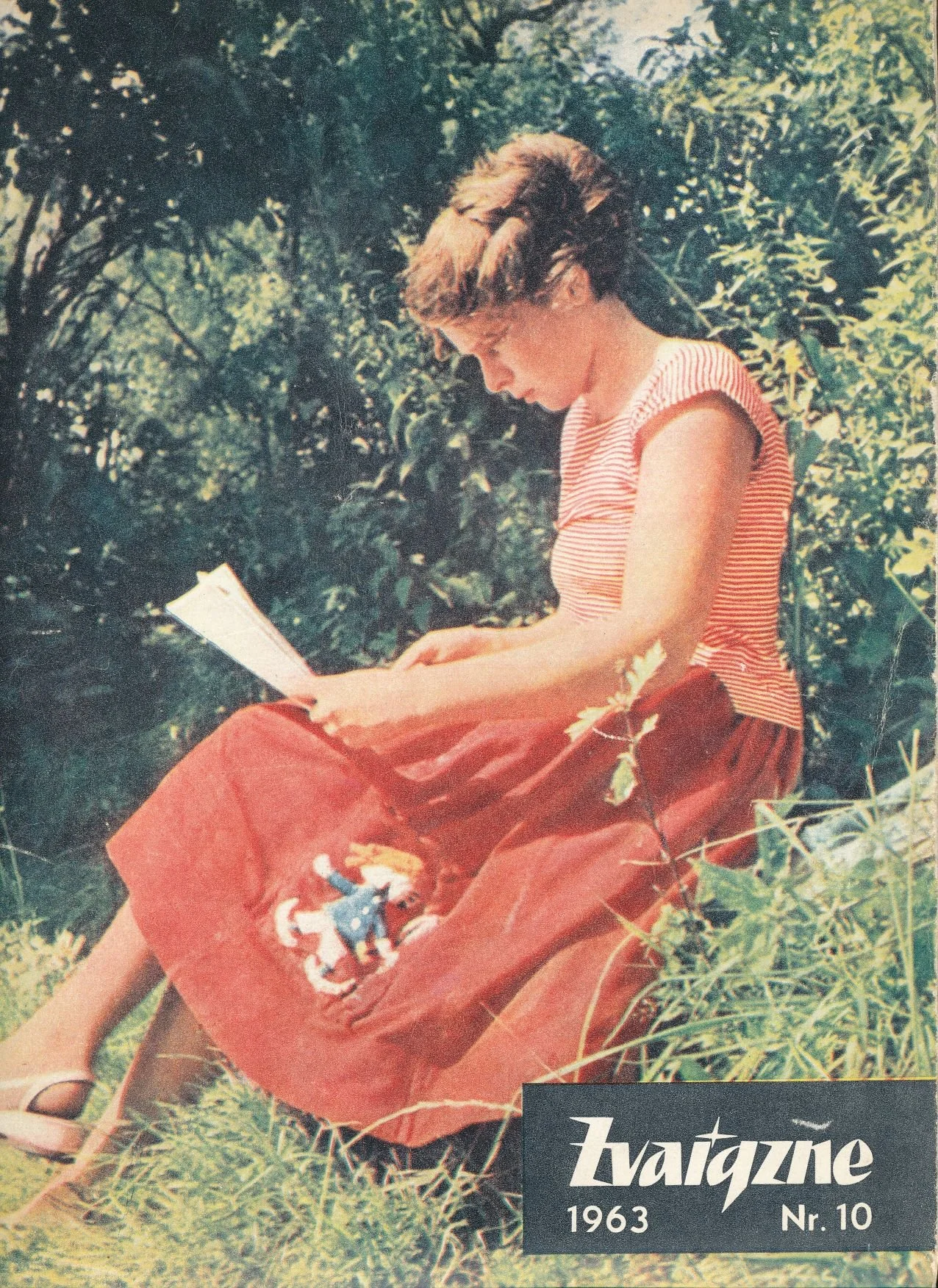
V. Gailis, Anticipating the Summer (“Vasaras gaidās”) [portrait of Zenta Dzividzinska], as reproduced on the cover of May 20, 1963, issue of The Star (Zvaigzne), published in Riga, Latvia.
Abstract [working version as of February 2026]
This chapter outlines some of my encounters with the photographic “archive” of Latvian artist and photographer Zenta Dzividzinska (1944-2011) who is also my mother.
Here I use the word “archive” in quotation marks because her photographic work became an archive only upon entering the collection of the National Library of Latvia in 2021, a decade after her passing. Dzividzinska was an artist, not an archivist, and her own treatment of her photographic work was very far from any of the structures, conditions, and institutional procedures we today associate with archival preservation.
The chapter is simultaneously a personal and professional attempt to reflect on my mother’s creative career, which she had decided to end quite abruptly around the time of my coming into the world. To approach her artistic legacy, I acknowledge my discomfort and struggle with theoretical concepts that I, as a historian of art and photography, have been trained to deploy in discussing and analyzing collections of photographic images and the lives of their makers. I anticipate that somewhere between Barthes’ mournful rumination and Foucault’s razor-sharp dissection of power relations lies another possibility, at this moment only a possibility, of discovering something about the artist, about her work, and the photographic medium itself, while examining it from the extremely uncomfortable viewing position of the artist’s daughter and scholar.
I have based the structure of the chapter on visual analysis of six photographs—portraits and self-portraits of Zenta Dzividzinska from her artistic practice before my birth. Following a brief introduction to the theoretical and methodological framework that informs my reading of these photographs, the narrative unfolds in reverse-chronological order.
I begin with my last encounter with my mother’s photographic work before it entered the collection of the National Library of Latvia: in 2021 her photographs from the 1960s became part of contemporary artist Sophie Thun’s solo exhibition.
Next, I look back at my first encounter with her entire oeuvre, soon after her passing in 2011.
The following section delves into my fragmentary awareness of my mother’s creative work while volunteering as her studio assistant during the last six years of her life.
In the last part of this chapter, I try to recover my earliest memories of my mother’s photographic work in the 1990s, amidst the cruelest economic crisis that came along with the political liberation of Latvia.
Finally, I conclude the chapter with my attempt to formulate my understanding of the origins of Dzividzinska’s career in photography. My relationship with her photographic legacy evokes the ending scenes of Michelangelo Antonioni’s 1966 film Blow-Up (1966), which we watched together and afterwards discussed multiple times during the last years of her life. I feel that the film for her was a particularly relatable metaphor for her own life, aspirations, and artistic practice.
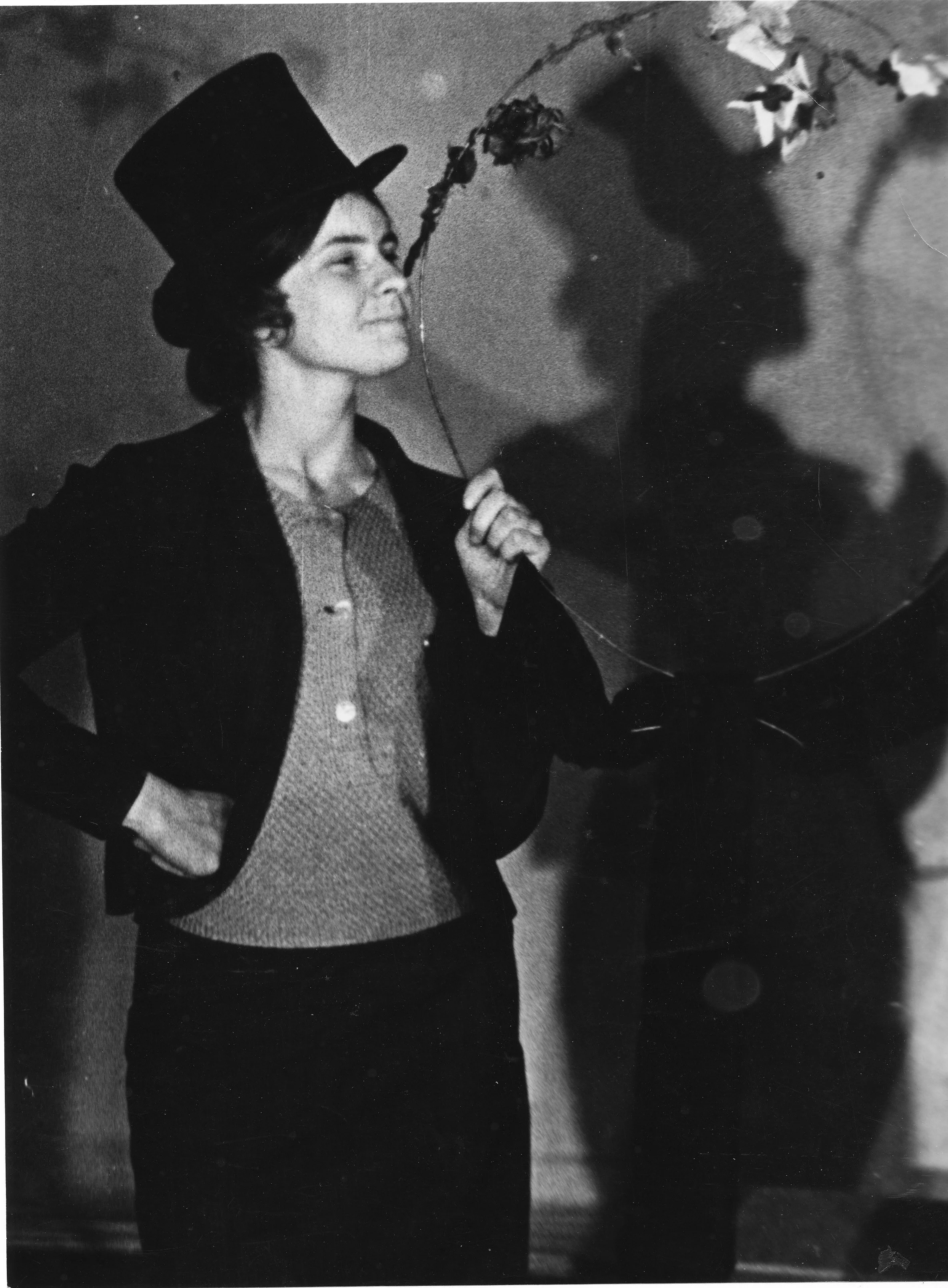
Zenta Dzividzinska. Untitled (Self-portrait). From the series Riga Pantomime, 1964-1966.